
News & Events



In Conversation with Tacchino
A family legacy, carved into the hills of Piedmont.
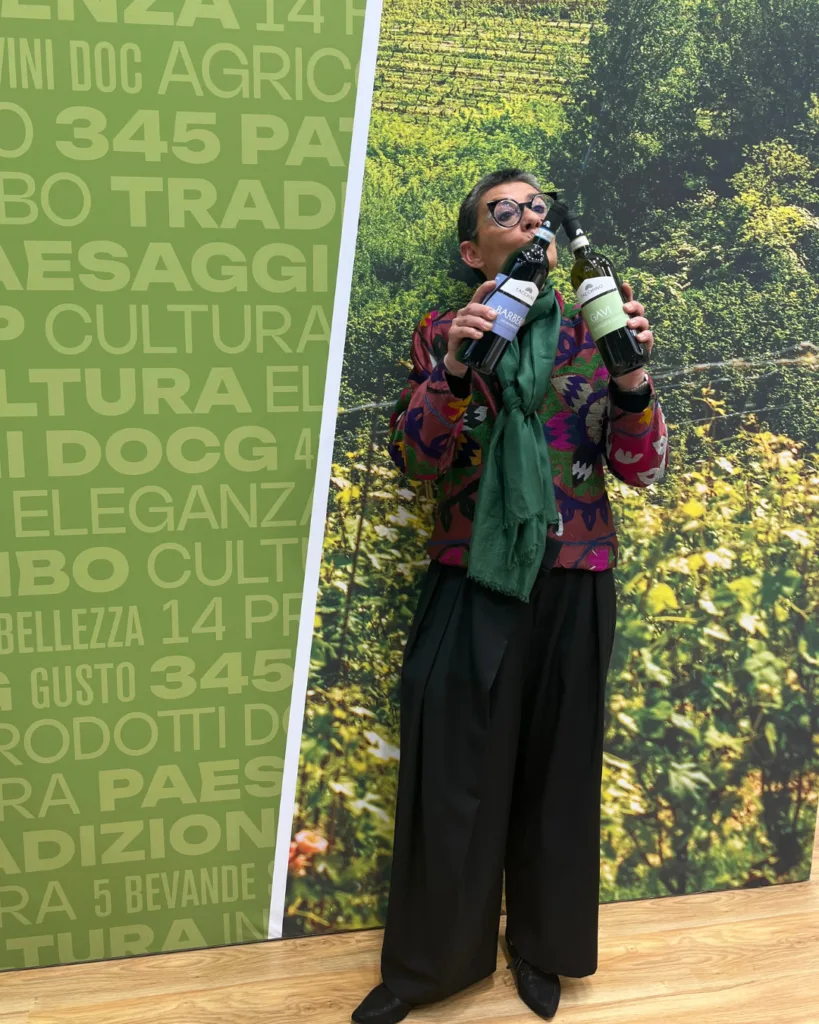
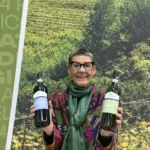
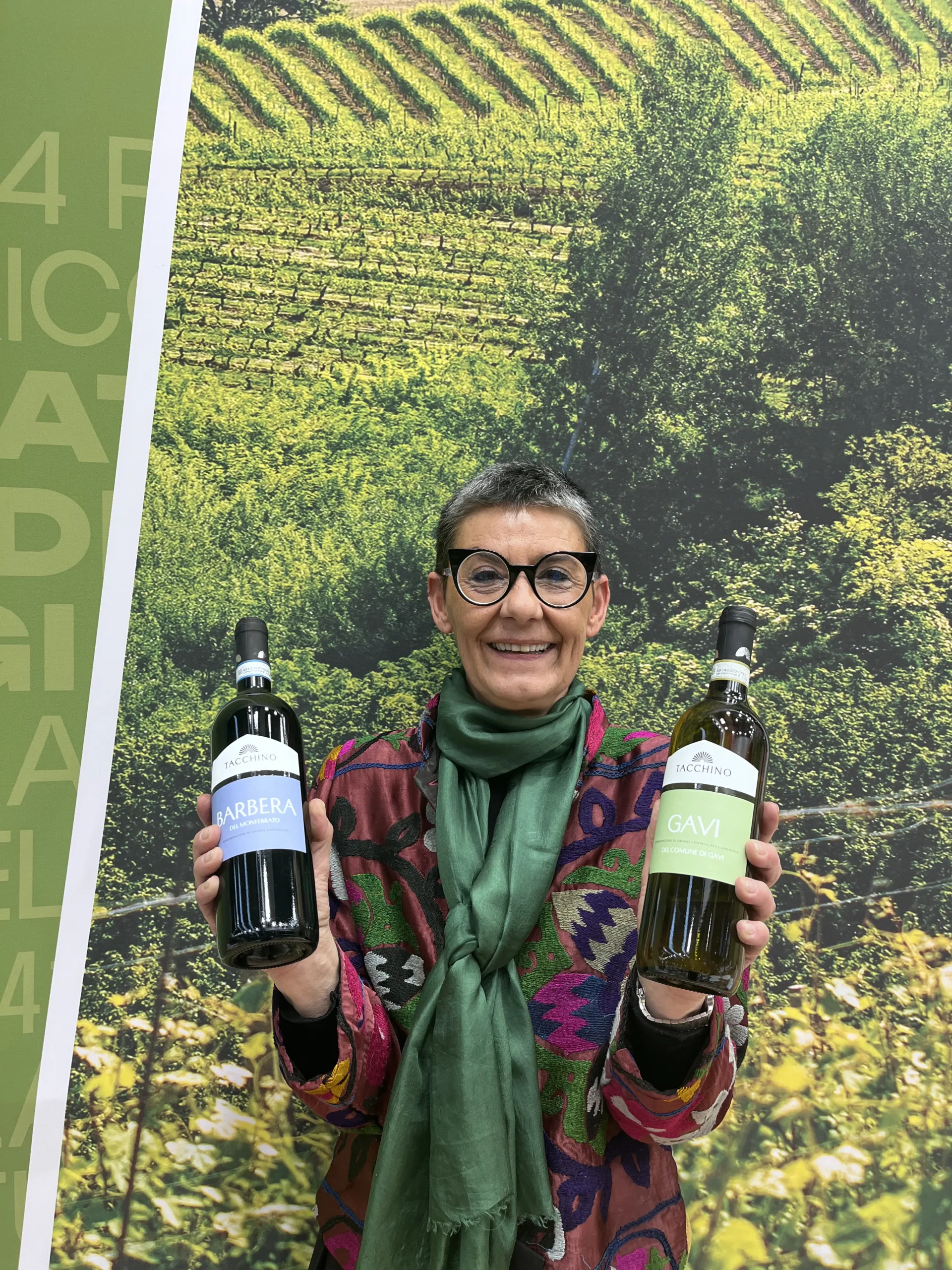
For over three generations, the Tacchino family has cultivated a reputation for vibrant winemaking in the hills of Castelletto d’Orba, Piedmont. Romina’s journey as the face of the brand began roughly 25 years ago. Driven by a desire to craft more complex wines, she followed her grandfather’s advice to experiment with the rare Dolcetto “nibio” clone. This move led to the creation of their award-winning Dolcetto Du Riva, which has secured the prestigious Tre Bicchieri for over a decade.
Since 2004, Romina has been the primary link between the estate and its international partners. She is known for welcoming guests with an infectious enthusiasm that has made the Tacchino name synonymous with the warmth of Piedmontese hospitality, while ensuring that her family’s heritage and her grandfather’s viticultural legacy continue to reach a wider audience.
Your family has been making wine here for generations—what does the Tacchino identity mean to you today?
Being born into wine, growing up among the vineyards, I could never imagine a life without making wine. Today, the Tacchino name stands for quality, respect for the land, and a deep love for what I do – driven by passion and by the pride of having carried my family’s name, and the fruits of our work, to countries my grandfather, my father, and those before them could never have imagined reaching.
You and your brother Alessio run the estate together—how do your roles complement each other?
Ours is a family business, so it is run like a family—everyone has their responsibilities according to their strengths. We make decisions together regarding vineyard and cellar work, which Alessio then oversees directly, supported by our oenologist and agronomist. I handle sales, client relationships, and the administrative side of the business.
At key moments, such as the harvest, I am also hands-on, especially in the cellar, where I carefully follow the “birth” of our wines. Alessio often says, “you are the mind and I am the arm,” perhaps to downplay his role. I always reply, “the mind and the arm are complementary—separated, they achieve nothing!”
Your grandfather encouraged your early experiments with the Nibio Dolcetto clone—how did that moment shape your path in the winery?
My journey was not easy, especially at the beginning, for several reasons. First, I am a woman—traditionally, in farming culture, women were expected to stay at home and care for children, while I wanted to prove that a woman can run a business. I also wanted to transform our winery into a flagship for our region, focusing on quality and showing that Dolcetto—especially in Ovada—is a great grape capable of surprising with its character and longevity.
At the beginning, the only person in my family who truly believed in my ideas was my grandfather, Carletto, known as “Du Riva.” He told me that if I wanted to achieve my goals, I should use the Nibio clone. He gave me the opportunity to make my first Nibio-based wine using grapes from a few rows he had carefully preserved, and he encouraged me to age it in wood.
If I have come this far today, much of the credit goes to him. The only way I could say “thank you” was by dedicating the wine to him, naming it after his nickname: Du Riva. When it first received the prestigious Tre Bicchieri award from Gambero Rosso, he was happy—first because he always believed in the clone’s potential, and also because he believed in me and my ideas. Thank you, Grandpa.
The vineyards sit in a natural amphitheatre near the Torre dell’Albarola—how does that shape the character of your wines?
I can answer this by quoting what I wrote on the label of our Albarola Barbera Selezione: “The Albarola is the stone sentinel that has watched over our vineyards for more than a thousand years. Built in 917 AD as a defensive tower, it has witnessed centuries, seasons, and harvests without ever looking away. Our valley takes its name from this ancient structure, and from it we still learn the value of constancy, care and vision. It is a root that holds firm and a vine that grows balanced on the ridge of time, pointing the way forward.”
You’ve championed a more ‘serious’ style of Dolcetto—what defines that for you?
It means having concretely demonstrated that, through dedication and passion, it is possible to restore dignity and prestige to a grape variety that has been somewhat overlooked and undervalued. Continuing on this path, it can become a cornerstone of the Piedmontese and Italian wine landscape.
Your Gavi di Gavi has been a long-standing favourite, especially in the UK—what makes it so enduringly appealing, and how does it reflect your terroir?
It may sound obvious, but its timeless appeal comes from its intrinsic qualities: freshness, drinkability and minerality. This minerality reflects the unique nature of our soil, which has marine origins, and our geographical position. Our hills are very close to the sea, and the sea breezes bring salinity to our vineyards, enhancing the wine’s mineral and savoury character.
Piemonte is changing, even with challenges like wolves returning—how is vineyard life evolving?
Before the return of wolves, we had many wild boars and deer, which damaged our crops before harvest, forcing us to fence our vineyards completely. Now wolves have also returned. They do not pose direct problems for us as wine producers, except for the fear of staying in the vineyards after sunset.
The real challenge for the coming years is climate change. In this respect, we at the Tacchino estate are more fortunate than many colleagues, mainly due to two factors: the altitude of our vineyards (350–450 metres) and the soil’s strong ability to retain water. These conditions allow our grapes to reach perfect ripeness with almost no water stress.
You’ve worked with Bancroft Wines since 2004—how has the UK’s understanding of your wines evolved?
Working with Bancroft for over 20 years fills me with pride, especially because I believe the relationship between producer and distributor is not just about business, but also about human connection. For me, the Bancroft team is my English family.
Being part of such a prestigious portfolio has helped position my wines as high quality from the very beginning. We started with Gavi di Gavi—at one time, Tacchino was known only for Gavi—but today it represents much more: the entire territory of southern Piedmont. Our long-standing partnership also conveys a strong sense of reliability and seriousness
When you’re hosting a tasting, what do you want people to feel or take away?
I want people to perceive the soul and essence of the wine, and the work behind it. I believe every bottle from a small, quality producer contains part of their heart and soul—that is its greatest value.
I always say that every bottle contains a part of me; my wines are like my children. That is why tastings, meeting clients, and sharing the experience with them are such an essential part of my work—just as important as being in the cellar during harvest and fermentation.
If someone could try just one wine to understand your family and land, which would it be—and why?
Only one? That’s very difficult… but if I must choose, I would say Du Riva. Although Dolcetto is grown throughout Piedmont, the Nibio clone is unique to the Ovada area—it is truly one of a kind. It is also dedicated to my grandfather, and therefore to my whole family. It can be a little austere, but when treated with care and passion, it can be truly surprising.
Looking ahead, what’s next for your wines?
I have always believed that wines should only be released when they are truly ready, and I have invested heavily in this philosophy. Wines from our area often require long, sometimes very long, ageing.
Today, we are experimenting to see whether we can achieve the same level of pleasure with shorter ageing periods. At the same time, we are adapting our vineyard practices to climate change, improving resilience and managing alcohol levels.
What do you drink when you’re not drinking your own wines?
When I am not drinking my own wines, I taste those of other producers—not only from my region but also from other areas and countries. I believe comparison is essential for growth and improvement.
You have recently redesigned your labels—what inspired this change?
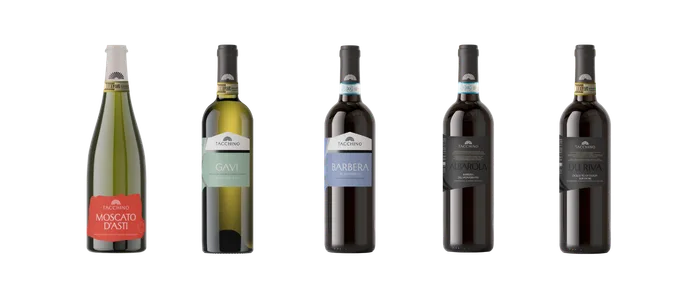
If the wine contains the soul of the producer, the label represents its clothing—its style. Over time, our style evolves. The previous labels were designed in 2008—this year they would have turned 18. In those years, the world has changed, we have changed, and in some ways, our wines have evolved too.
While retaining their essence, they have become more elegant, more representative of our territory—perhaps even minimalist. We wanted the packaging to reflect this evolution.
The new labels are a graphic representation of our vineyards as seen from above. Their asymmetrical shapes mirror the shape of our plots, and the lines within them represent the vineyard paths. In this way, our customers can not only taste the fruit of our land but also imagine standing among our vines—simply by looking at the label.
