
News & Events

In Conversation with Le Clos du Caillou

In Conversation with Marilou and Axel Vacheron of Le Clos du Caillou
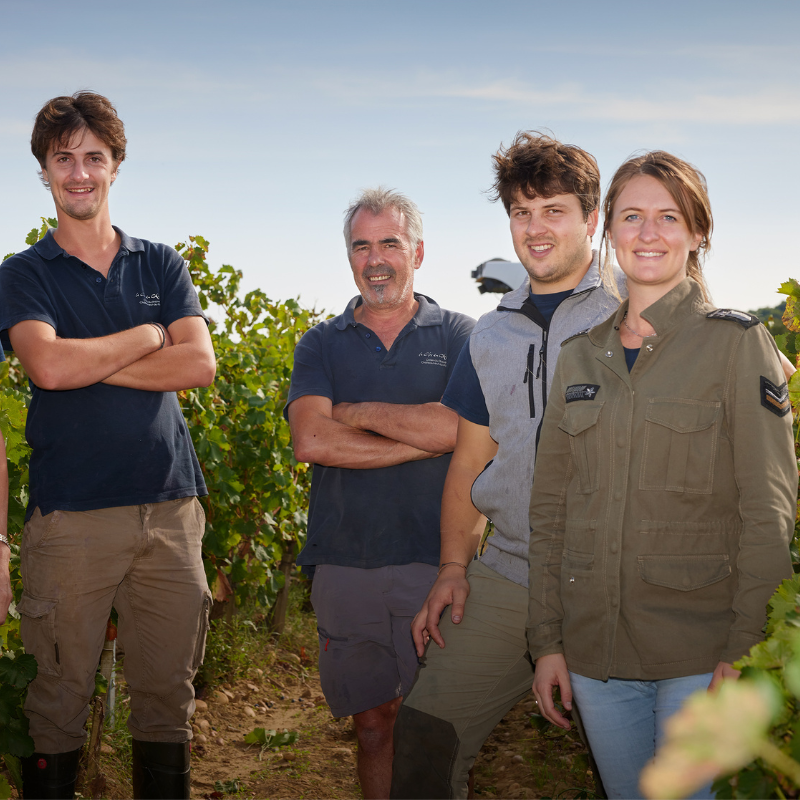
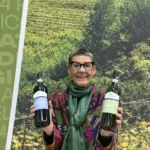
Earlier this summer, we had the pleasure of spending time with Marilou Vacheron during her visit to London for the Rhône Roots tasting. Following the event, we asked Marilou and her brother, Axel, to talk about the generational handover of the family estate, their commitment to organic viticulture, recent vintages, and more. Their insights follow below.
Marilou Vacheron – Fourth generation of the Vacheron family to take over the estate, Marilou joined Clos du Caillou after studying Business in Lille, supplemented by enriching experiences in the world of wine in France and internationally. She embodies a new ambitious generation, working with her brother Axel to continue the development of the Estate in Organic and Biodynamic Agriculture, with a modern vision of Châteauneuf-du-Pape. In 2020, she decided to take over, with Axel Vacheron her brother, the Domaine de Panisse, a 15th century Estate located on the beautiful terroirs north of Châteauneuf-du-Pape.
Axel Vacheron – An oenological engineer and graduate of the École de Changins (Switzerland), embodies the new generation at the helm of Clos du Caillou. He joined the estate in 2021, after training with the renowned oenologist Philippe Cambie. As a winemaker and oenologist, Axel oversees all cultivation and vinification, working with Bruno Gaspard. Axel puts his technical knowledge into practice to gradually refine the estate’s wines, relying on sandy terroirs, always using the most natural methods close to the terroir. He favours natural fermentations and meticulous work on aging in the estate’s underground galleries.
You both took over the estate from your parents. What was that transition like?
Marilou: Taking over the estate from our parents was both a great honour and a significant responsibility. Our mother, Sylvie, did an incredible job preserving the soul of Le Clos du Caillou after the sudden passing of our father, Jean-Denis. She held the estate together with Bruno Gaspard, with strength and passion — something we’ve always deeply admired.
Axel: When we officially stepped in (January 2016 for Marilou and January 2021 for me), it was a smooth but emotionally rich transition — because we weren’t just taking on a business, we were continuing a family legacy. We’d been involved from a young age, so it felt like a natural evolution. At the same time, we knew we wanted to bring our own vision while honouring the work of those who came before us. Today, we feel proud to work side by side, blending tradition with a fresh outlook — all while staying true to the unique spirit of Le Clos du Caillou.
Did you ever consider working outside of wine, or did you feel destined to take over from your parents?
Marilou: I studied Trade and Management at a Business School in Lille, concluding with research on wine. I then trained both abroad and in France, gaining experience with sommeliers, importers, wine merchants, and winemakers — all the key players in the wine world, which gave me a broad and precise view of the industry.
Axel: I studied Oenology and Viticulture at Changins and gained experience abroad. I made wine in Pouilly-Fumé at Domaine Serge Dagueneau, in Fully, Switzerland at Domaine Mathilde Roux, and at Mas Alta in Priorat. I also worked as Philippe Cambie’s right-hand man, following the 2020 vintage across several estates in both the Southern and Northern Rhône Valley.
Marilou: Coming back was a choice of the heart, but also a commitment to continue something meaningful — to bring new energy and to write the next chapter of our family story.
Your parents began working biodynamically in 2003 and achieved organic certification in 2010. How do you think this has impacted your wines?
Axel: The decision to work biodynamically and pursue organic certification was a very natural progression of our methods. Our grandfather always worked organically, though he never went through the administrative steps to become certified. So for us, it was a logical step — but it didn’t change our vineyard practices.
Marilou: Our goal is to protect the environment, our team, and the land itself — always with the idea of passing it on to the next generation. We believe these practices allow the wines to speak more honestly of their origin — and that authenticity is something we deeply value. Our wines show greater freshness and purity.
The property was excluded from the Châteauneuf-du-Pape appellation in the 1930s when the owners refused to have the land surveyed. Has this affected how the winery and its wines are perceived?
Marilou: It’s an incredible and unique story! Our Côtes-du-Rhône wines are produced within the boundaries of the Châteauneuf-du-Pape appellation — just 200 metres from Château Rayas. The terroir is exceptional. It’s always funny to see the reaction when La Réserve Côtes du Rhône is tasted blind in a line-up of Châteauneuf-du-Pape wines — the results are often surprising.
What has Bruno Gaspard’s legacy been?
Axel: Bruno Gaspard’s legacy is enormous — both in spirit and practical influence. He’s a visionary, making wine with passion, humility, and a deep respect for the land.
Beyond viticulture, Bruno has been a true mentor. He nurtures a culture of curiosity, always experimenting and improving year after year. He believes winemaking isn’t just about producing great wines — it’s about caring for the land so it can thrive for future generations. He taught us to think long-term.
What excites you about making wine in the Rhône?
Axel: The incredible diversity and richness of our terroirs. The Rhône Valley offers a unique combination of soils, climates, and grape varieties, which allows us to create wines with real character and complexity. We mainly work with sandy soils but also with clay and round pebbles.
These differences result in very distinct wine styles. The influence of the Mistral and our sometimes extreme climate gives our work real intensity. Each vintage tells a new story — and being part of that rhythm is truly exciting.
What has been the biggest challenge for you in recent vintages?
Marilou: The biggest challenge recently has been the increasingly unpredictable weather. Climate change has brought more extreme heat, irregular rainfall, and sudden storms, which makes vineyard management more complex each year. We have to be attentive and adaptable. At the same time, this challenge pushes us to refine our biodynamic approach and experiment with techniques — such as using cover crops — to enhance the resilience of the vineyards.
What do you drink when you’re not drinking your own wines?
Marilou: Naturally, wines from the Loire Valley, as that’s where our roots are — especially Sancerre! We also love Burgundy for its finesse and elegance. Axel is a real fan of Jura wines. Personally, I lean towards Italian wines from Piedmont or Tuscany. Languedoc wines are also fantastic value!
Are there any changes you’re looking to make at the winery?
Marilou: In 2020, we acquired a family estate north of Châteauneuf-du-Pape: Domaine de Panisse. It’s an incredible project for us, thanks to the quality of the terroir and the age of the vines — the Grenache was planted in 1921! We want to help this estate reach its full potential.
Axel: In the winery, we’re exploring gentler extraction methods and using less new oak to bring out more finesse and purity in the wines.
Marilou: We’re also thinking about how to reduce our environmental footprint — from packaging to energy use. For us, change doesn’t mean revolution — it’s about continuous, thoughtful improvement.
How is climate change influencing the decisions you make in the vineyard and winery?
Axel: Climate change is one of the biggest influences on our work today. In the vineyard, we’re seeing earlier harvests, more frequent droughts, and intense heatwaves. To adapt, we’re adjusting pruning to protect grapes from sunburn, using cover crops to retain soil moisture, and focusing on biodiversity to build resilience. We’re also considering planting rootstocks and grape varieties better suited to warmer conditions, such as Clairette Rose or Mourvèdre.
In the winery, we’re using lower extraction and gentler ageing to maintain balance in the wines.
Since Axel began working alongside Bruno, have there been any notable changes in the winemaking?
Marilou: Since Axel joined Bruno in leading the winemaking, the changes have been subtle but meaningful — less extraction, fewer punch-downs. He’s also reduced the proportion of new barrels and introduced larger formats like demi-muids and foudres to preserve purity.
Axel: We share the same vision, so there haven’t been major shifts — it’s more about ongoing adjustments and responding to the climate. For instance, we’ve introduced cover crops in the vineyard to create a natural “mulch” that helps retain soil moisture.
What are your long-term goals? What’s next for Clos du Caillou?
Marilou: We want to deepen the identity of Clos du Caillou by producing more single-parcel cuvées that reflect their place, the vintage, and our philosophy. Each wine should express purity, elegance, and emotion — with as little intervention as possible.
Axel: Looking ahead, we’re focused on reinforcing our organic and biodynamic practices and continuing to adapt to climate change using new tools, while preserving our resources.
Marilou: Beyond the technical aspects, we want to continue building strong relationships — with the land, with our team, and with those who enjoy our wines all over the world.