
Flint Vineyard
Home | Flint Vineyard

Flint Vineyard
NORFOLK, ENGLAND
We recently spent a day with Ben, who’s reserved but hugely knowledgeable, with a calm intensity that shapes everything he does. He told us, ‘This is such a young industry—we’re constantly learning.’ It’s a sentiment that seems to guide the whole operation. This is Ben’s home, and he knows every inch of it. Pheasants dart across the tracks as tractors shift gear and cellar doors clatter open—Flint feels like a working farm, with a steady sense of purpose running through it.
The team is small, hands-on, and evidently close-knit. Among those we meet is Ollie, Assistant Winemaker & Vineyard Manager, who joined five years ago. A former sommelier who quips that he ‘got tired of selling other people’s wines’, contacted Ben and started at the bottom—cleaning tanks. He’s since elbowed his way up and now has his own cellar hand, though adds with a humble laugh ‘still cleans tanks’.
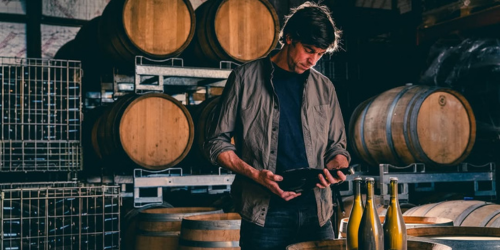
In the winery, experimentation is everywhere. Bacchus is proving more like Riesling than Sauvignon Blanc—complex, aromatic, and capable of expressing subtle vineyard variation. Flint plays with texture and structure through fermentation in neutral barriques (50%) and concrete (15%), with no stainless steel used except for Charmat production. Even in a compact space, they’ve made room for a small barrel cellar and new concrete eggs, with everything geared toward quality and character.
A major expansion is underway, but the ethos remains grounded: hands-on, sustainable, always learning. Flint is pushing the boundaries of English winemaking—with quiet confidence, and real momentum.


The Wines
Charmat NV
Charmat Rosé NV
Chardonnay
Fumé
For vintages & availability, please contact our Customer Service Team at [email protected] or +44 (0)20 7232 5450